
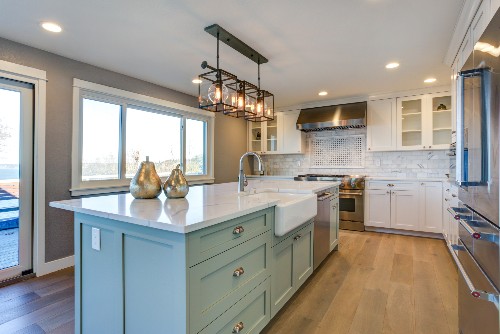
You know that moment when everyone ends up standing in the kitchen, even though there are perfectly good seats elsewhere? That is not an accident. The kitchen naturally draws people in, especially when the space works well.
If your kitchen feels cramped, cluttered, or awkward to move through, a kitchen island may be the missing piece. With the right planning, an island can make your kitchen more functional, more social, and more enjoyable to use every day.
What Is a Kitchen Island?
Simply put, a kitchen island is a freestanding counter or cabinet that sits outside the kitchen's main perimeter. Unlike wall-based counters, an island can be accessed from multiple sides.
Kitchen islands are often used for food prep, casual dining, storage, or cleanup. Some include sinks, cooktops, or additional appliances. Others are mainly used as gathering spaces where people can sit, chat, and lend a hand.
A well-designed island blends into the kitchen layout while improving how the space functions.
Kitchen Islands Remain a Top Priority for Buyers
Kitchen islands are not just popular right now. They continue to rank high on buyer wish lists year after year. Industry research from the National Kitchen and Bath Association shows that most homeowners view a kitchen island as an essential feature.
Buyers are drawn to islands because they offer flexibility. One surface can serve many roles throughout the day, from breakfast bar to homework station to buffet space when entertaining.
Key reasons kitchen islands appeal to buyers include:
- Extra counter space for cooking and serving
- A natural gathering spot for family and guests
- Visual separation in open floor plans
- Added storage without closing off the room
Even if selling is not on your radar, these benefits still matter for daily living.
5 Kitchen Island Ideas for Your Space
A kitchen island should do more than look good. It should support how you move, cook, sit, and gather in the kitchen. Here are five design considerations that focus on function first, helping you avoid common layout mistakes and get more value out of the space you have.
1. Design Your Island to Support Easy Movement
One of the most common kitchen island mistakes is not allowing enough space around it. An island should improve flow through the kitchen, not create obstacles.
Most kitchens need 36 to 48 inches of clearance on all working sides of the island. This spacing allows people to pass through comfortably, open appliance doors, and work side by side without crowding. When movement feels natural, the kitchen becomes easier to use during both quiet mornings and busy evenings.
2. Plan Carefully for Seating
A kitchen island with seating can double as a dining area, homework spot, or gathering place. But comfort depends on getting the measurements right from the start. Each seated person needs enough counter space and legroom to sit comfortably.
Basic seating guidelines to follow:
- At least 24 inches of counter width per seat
- A minimum of 13 inches of knee clearance
- Space behind stools for easy movement
3. Choose an Open & Inviting Design Style
Heavy cabinetry or bulky details on a kitchen island can make the island feel closed off, especially in smaller kitchens.
Open shelving is one way to keep the design light while adding useful storage. It allows frequently used items to stay within reach and gives you space to add personal touches. For homeowners who want some concealment, mixing open shelving with closed cabinets can create balance without overwhelming the room.
4. Explore Different Kitchen Island Shapes
Some shapes define work zones more clearly, while others improve traffic flow or create better seating arrangements. The right option depends on room size, layout, and how the kitchen is used day to day.
Common kitchen island shapes include:
- Rectangular islands for straightforward layouts
- L-shaped islands that separate prep and seating
- T-shaped islands for larger gathering areas
- Curved islands that soften movement paths
- Dual islands in spacious kitchens with multiple uses
5. Place Your Island Where It Works Best
Island placement should reflect real habits, not just what looks balanced on paper. While a centered island works in many kitchens, other layouts may be more practical.
Think about where food prep usually happens, where dishes pile up, and where people tend to stand and talk. A prep island closer to the refrigerator or a cleanup-focused island near the dishwasher can make everyday tasks easier. Let how you actually use the kitchen guide the placement rather than default positioning.
Bring Your Kitchen Island Vision to Life
A well-designed kitchen island starts with smart planning and ends with a space that truly supports how you live. From layout and spacing to seating, storage, and style, the right decisions early on make all the difference in how your kitchen functions every day.
If you are ready to explore kitchen island ideas or want guidance on creating a layout that fits your home, working with an experienced contractor can help bring everything together.
Get the Best Design with a Professional Kitchen Contractor
The team at Holland Kitchens & Baths specializes in thoughtful kitchen design, combining practical expertise with a personalized touch. Browse through some of our work or call (860) 236-3111 to start a conversation about your kitchen remodeling goals.